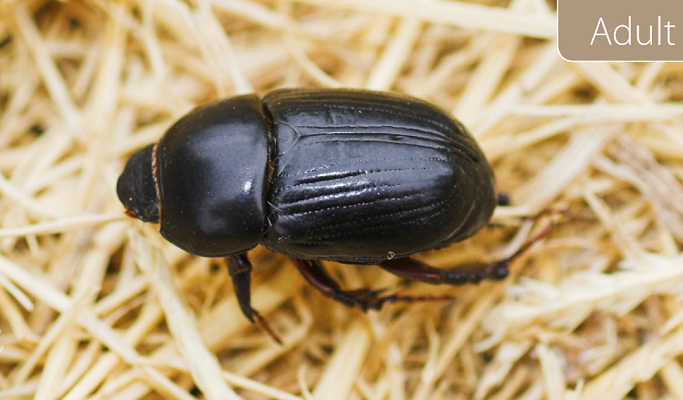
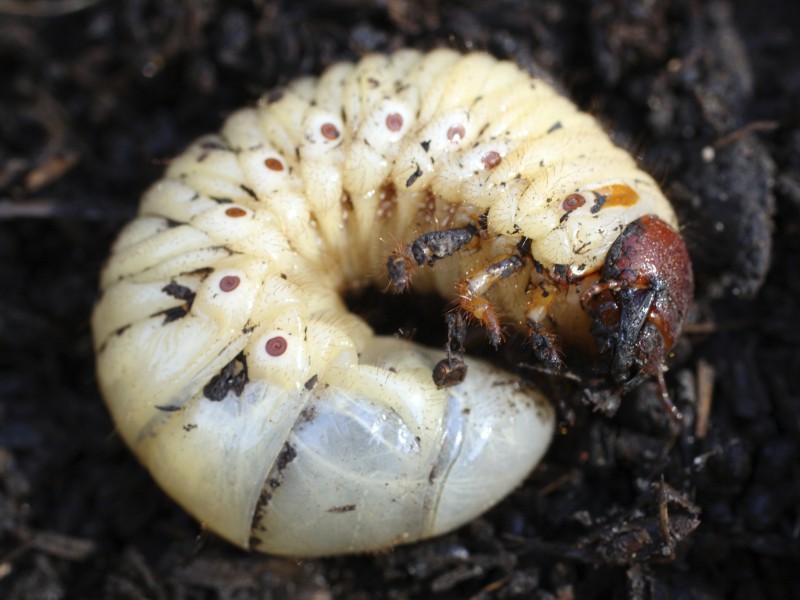
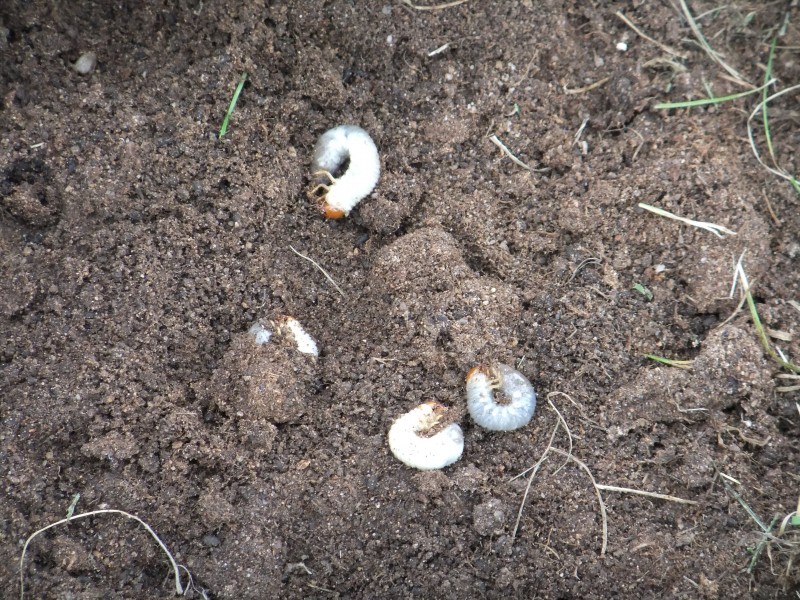
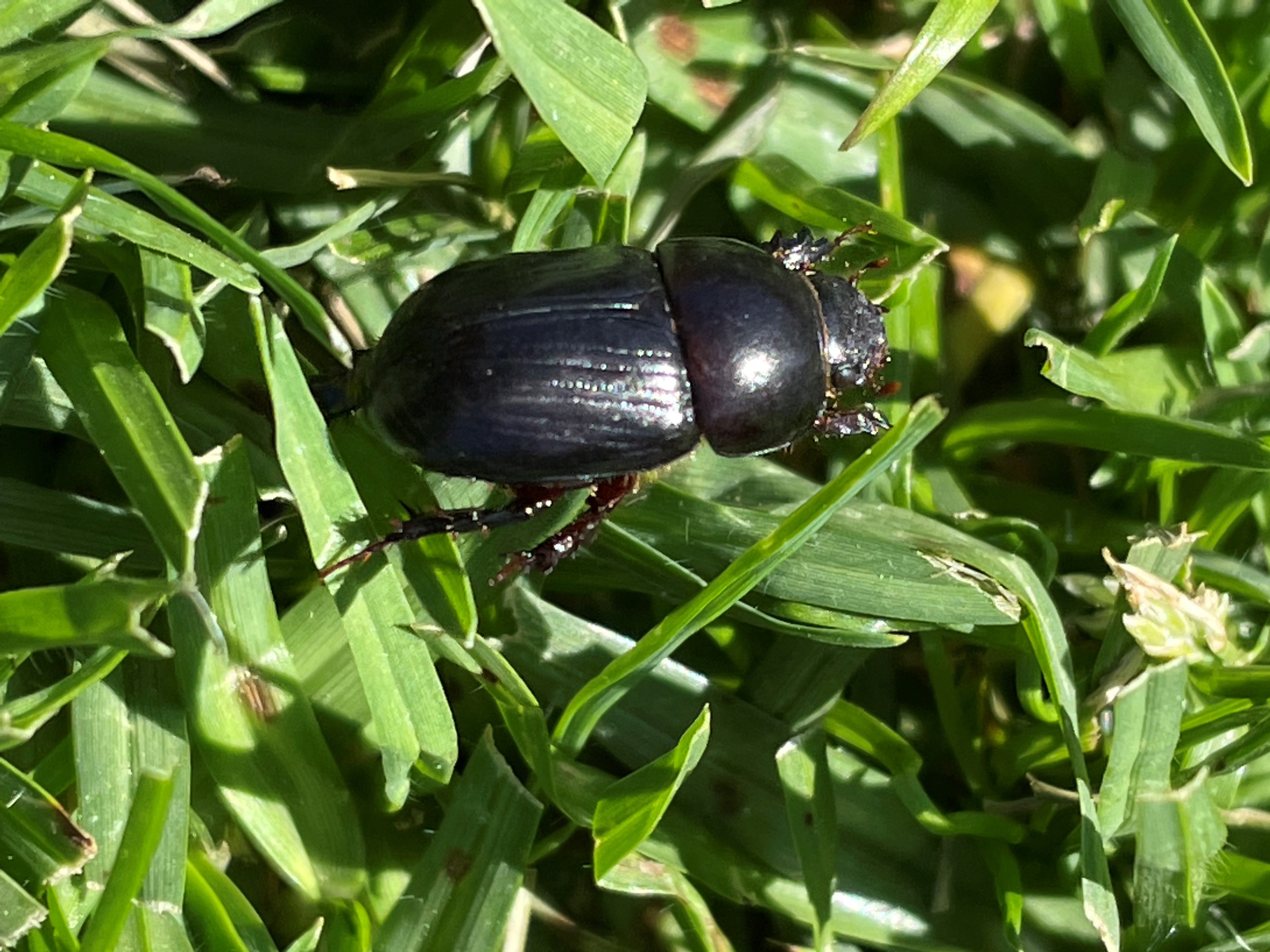
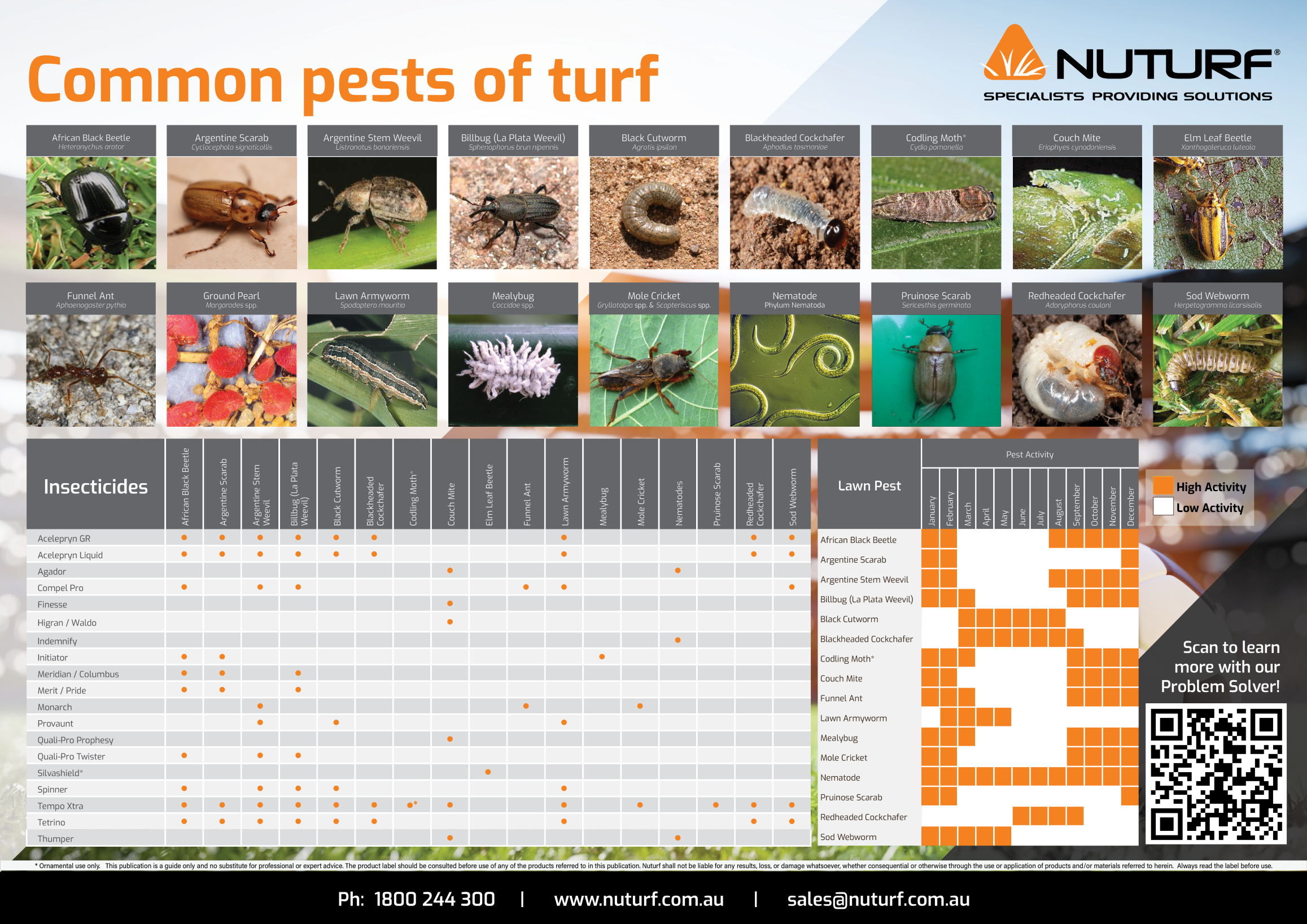
African Black Beetles can be identified in both their larval and adult stages.
The larvae are white to creamy-white, soft-bodied curl grubs that grow up to 25 mm long. They have three sets of legs and a hard, light-brown head capsule, making them easy to recognise when found in the soil.
The adult beetles are shiny, jet-black scarab beetles measuring up to 15 mm long. They have distinctive serrated front legs and are often seen following rain or irrigation.
What is the Biology and Lifecycle of African Black Beetles?
The female African Black Beetles can lay up to 80 eggs that hatch in 2-5 weeks, depending on temperature the larvae develop through 3 stages. The first instar feeds on decaying organic matter, and as they grow they begin feeding on plant roots. The fully grown larvae (3rd instar) are about 25mm long, creamy white in colour, curled up with 3 pairs of legs. When the larvae are fully grown they build an oval chamber, empty the hind gut and become a pre-pupae. After about a week the pre-pupae develop into pupae. The pupae develop into adult beetles after 1-3 months and emerge after rain or irrigation.
Signs of Damage in Turf
African Black Beetle damage often shows up quickly and can be spotted by a few key symptoms. You may be dealing with an infestation if you notice:
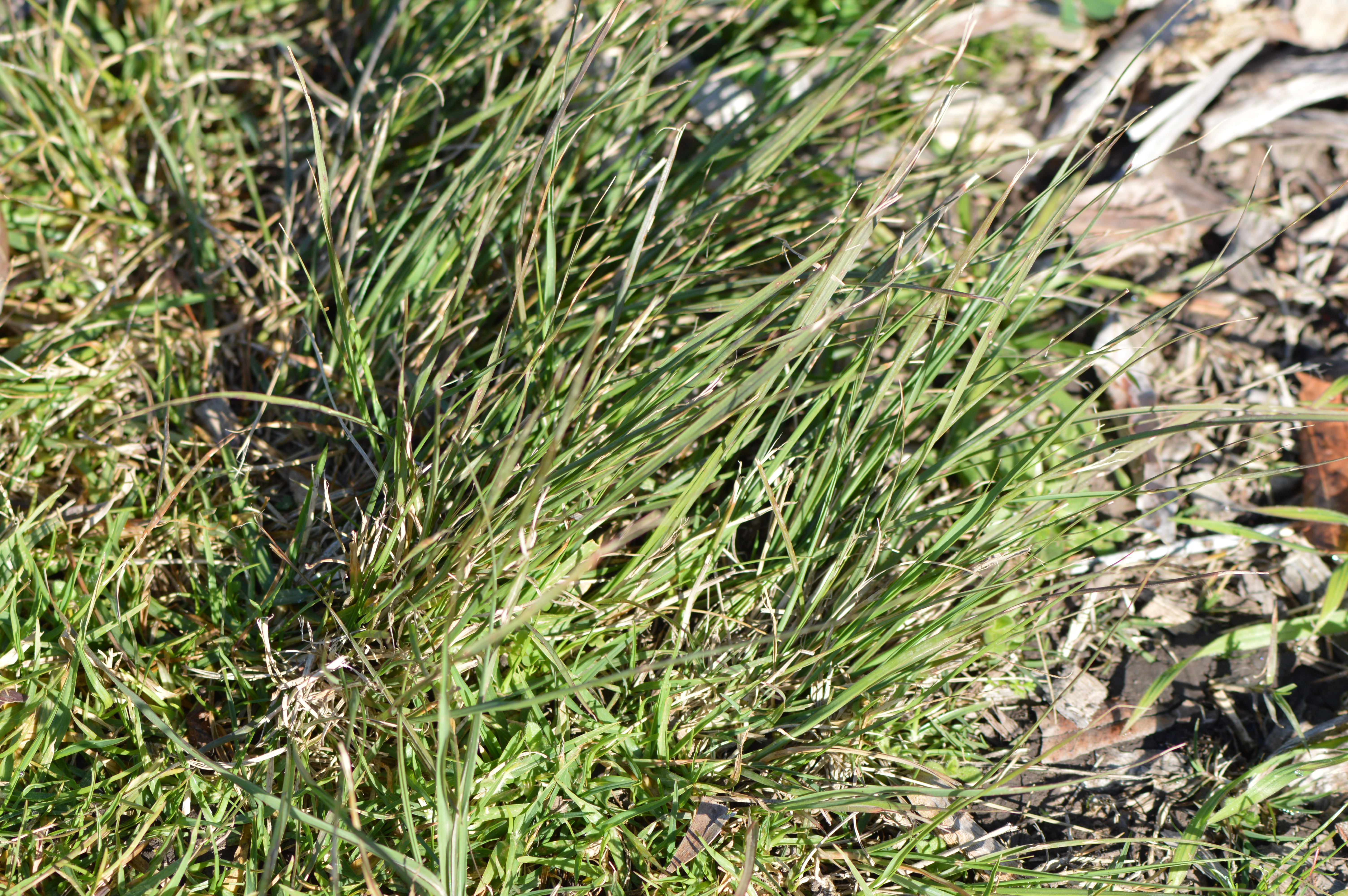
Turf lifting easily like loose carpet, due to severe root loss
Sudden yellowing or thinning, especially in irregular patches
Rapid decline during spring and summer, when larvae are most active
Birds pecking or digging at the surface, searching for larvae
Soft, spongy or unstable turf, caused by weakened or destroyed roots
These signs typically indicate that larvae are actively feeding below the surface and damaging the turf’s root system.
How to Control African Black Beetle in Turf
Effective control revolves around targeting both the adult and larval stages of the beetle. Here’s how to manage it in turf environments:
Apply a suitable insecticide targeting adults and larvae. Timing matters early application (late winter/spring) before eggs are laid improves results.
Water-in the product when required by the label so it penetrates to the soil layer where larvae feed.
Monitor turf health over 1–2 weeks to check for improvement and any signs of persistent larvae.
Use a preventative application in spring to reduce future outbreaks because the adult walking phase on the surface is more vulnerable in early spring than commonly assumed.
Maintain healthy turf through balanced nutrition and reduce thatch to minimise beetle habitat and make control more effective.
Common Questions About African Black Beetle (FAQs)
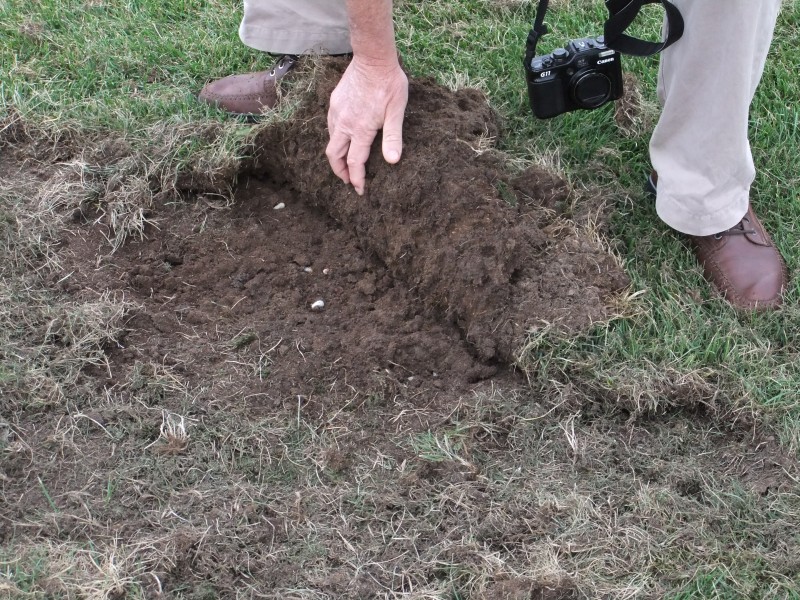
How do I know if I have African Black Beetle? Lift a small section of turf. If larvae are present and the turf lifts easily due to root damage, it’s likely African Black Beetle.
When are they most active? Spring to late summer larvae feed in the soil and adults emerge under warm, humid conditions.
Can I prevent them in the future? Yes, early spring applications and maintaining good turf health greatly reduce risk.
Do adults or larvae cause more damage? Larvae cause the most severe root loss, while adults may contribute to surface damage via foraging or attracting birds.
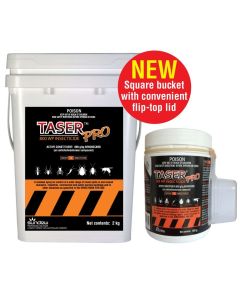
Taser Pro Insecticide is a residual broad spectrum non-repellent spray for the control of a wide range of insect pests in domestic, farm, agricultural, industrial, commercial and public service buildings.
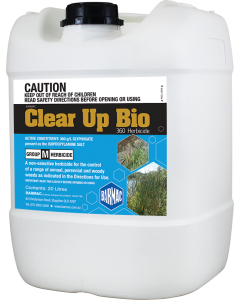
Clear Up Bio 360 Bi-Aquatic is a non selective herbicide containing 360g/L of the active ingredient glyphosate present in the form of an isopropylamine (IPA) salt.
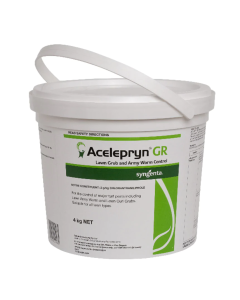
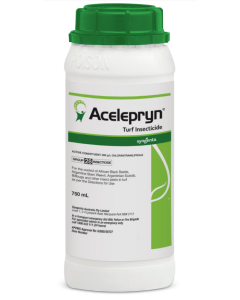
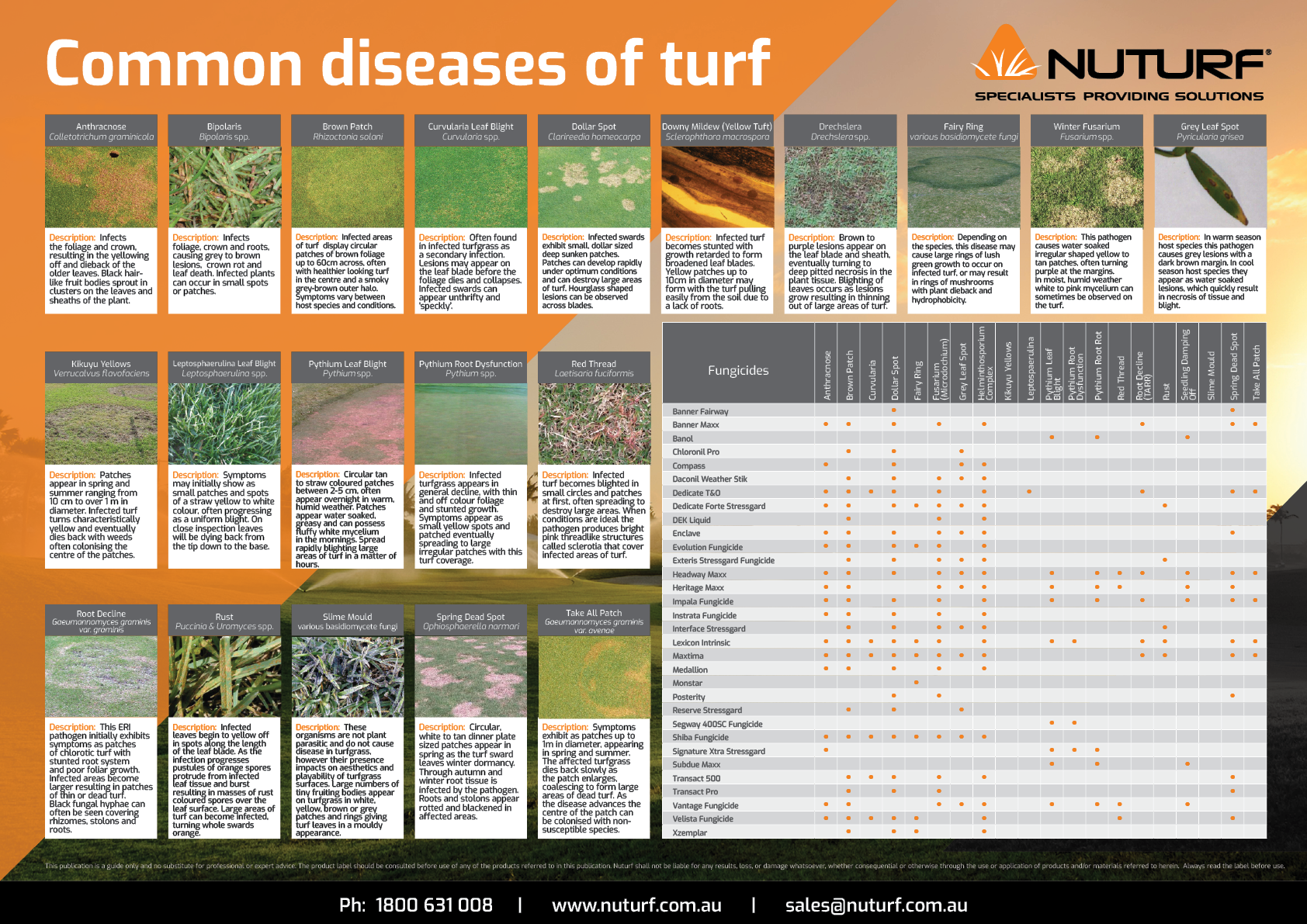
Acelepryn is an insecticide that provides safe and effective control of a wide range of turf-damaging insects while also minimising the impact on the environment.
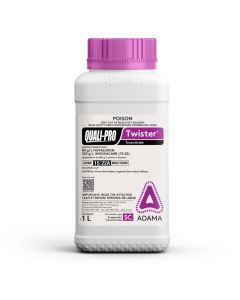
Quali-Pro Twister is a highly effective insecticide for robust knockdown and residual control of Argentine Stem Weevil, Billbug and African Black Beetle in turf.
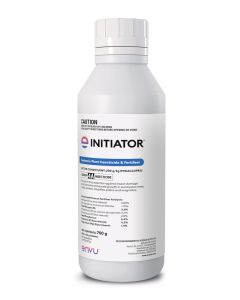
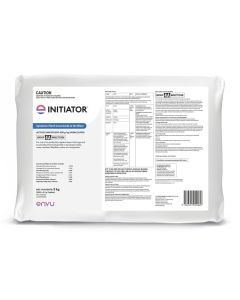
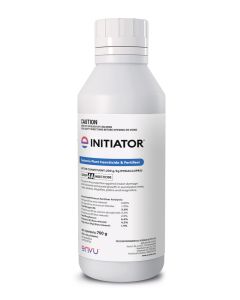
Initiator Systemic Plant Insecticide comes in tablet form and provides enhanced growth and long-lasting protection against the damage caused by various insects that attack containerised, newly planted and established plants.
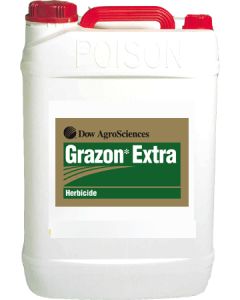
Grazon Extra is a herbicide that provides control of a wide range of environmental and noxious and herbaceous weeds with the combined formulation containing the three active constituents 30% Triclopyr, 10% Picloram and 0.8% Aminopyralid.
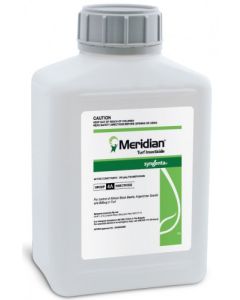
Meridian insecticide is a water dispersible granule that provides effective control on a wide variety of insects and grubs, killing through both contact and ingestion.
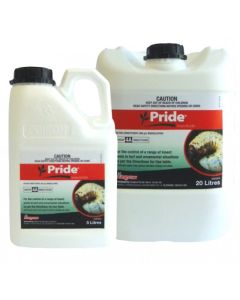
Pride insecticide contains the active constituent of 200g/L Imidacloprid. Pride’s systemic action provides control of a range of insect pests in turf and ornamental situations.
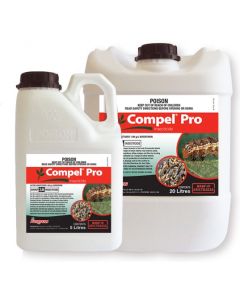
Compel Pro is a unique water-based formulation containing 100g/L of the active ingredient bifenthrin. Compel Pro is formulated for the control of a range of pests in Turf and Ornamental plants. Available in 5L and 20L.
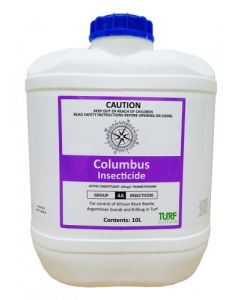
Columbus is an excellent translaminar and systemic insecticide. Columbus insecticide has contact, stomach and systemic activity, for the effective control of African Black Beetle, Argentine Scarab and Billbug larvae. Columbus is suitable on broadacre areas such as turf farms, sporting fields, parks, ovals and fairways.
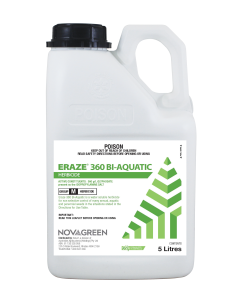
Eraze 360 Bi-Aquatic is a non-selective herbicide containing 360 g/L of the active ingredient glyphosate present in the form of an isopropylamine (IPA) salt.
Pride insecticide contains the active constituent of 200g/L Imidacloprid. Pride’s systemic action provides control of a range of insect pests in turf and ornamental situations.
Compel Pro is a unique water-based formulation containing 100g/L of the active ingredient bifenthrin. Compel Pro is formulated for the control of a range of pests in Turf and Ornamental plants. Available in 5L and 20L.
Columbus is an excellent translaminar and systemic insecticide. Columbus insecticide has contact, stomach and systemic activity, for the effective control of African Black Beetle, Argentine Scarab and Billbug larvae. Columbus is suitable on broadacre areas such as turf farms, sporting fields, parks, ovals and fairways.
Initiator Systemic Plant Insecticide comes in tablet form and provides enhanced growth and long-lasting protection against the damage caused by various insects that attack containerised, newly planted and established plants.
Initiator Systemic Plant Insecticide comes in tablet form and provides enhanced growth and long-lasting protection against the damage caused by various insects that attack containerised, newly planted and established plants.