Winter Broad Leaf Weed Management for Golf Courses & Sportsfields

Winter Broad Leaf Weed Management for Golf Courses & Sportfields
Broadleaf weeds (BLW) become a major focus for turf managers through mid-winter. Many species begin active growth during this period and then move into late-winter and early-spring flowering, creating visual disruption, competition, and long-term seedbanks if left unmanaged. Because this group is so diverse in form and behaviour, effective management requires a blend of good product knowledge, correct application practices, and timing.
What Are Winter Broadleaf Weeds?
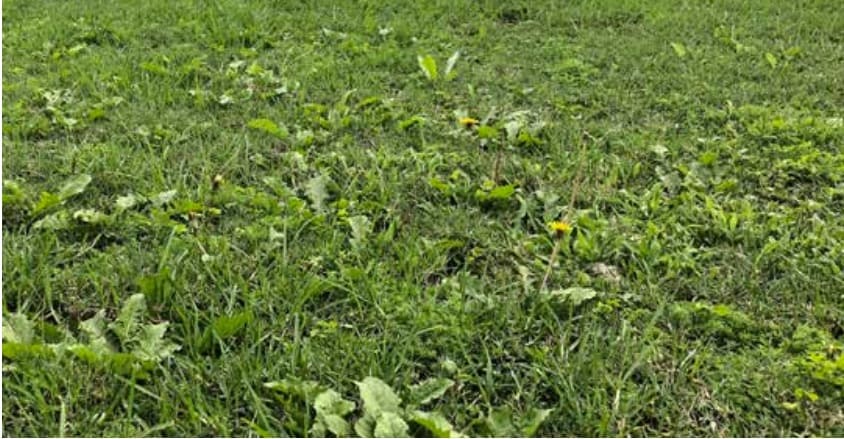
Broadleaf weeds include a wide collection of annual and perennial species that differ significantly from the uniform turf sward around them. Their foliage shape, colour, height, and flowering habits often stand out—making even small infestations highly visible on golf courses and sportsfields.
Beyond aesthetics, these weeds are true competitors. Many possess:
-
Broad, light-capturing foliage
-
Deep taproots for anchorage and resilience
-
Elevated flowering structures that dominate the canopy
-
Seed dispersal mechanisms that allow long-term reinfestation
This combination allows BLW to invade open turf, reduce uniformity, and hinder the playing quality of surfaces.
How to Identify Broadleaf Weeds
Most BLW:
-
Appear brighter or darker in colour than the surrounding turf
-
Grow upright or spread flat, contrasting with turf texture
-
Produce visible flowers or seed structures that sit above the turf canopy
During winter, new growth and early flowering stages make them particularly noticeable.
Biology & Lifecycle
Many winter BLW species germinate during the cooler months, establish quickly, and prepare to flower as temperatures rise. Annual types can generate large quantities of seed, which remain viable for many seasons, leading to recurring infestations.
Perennial types use stored energy and deep roots to overwinter and regrow each year—making timely post-emergent control essential.
Signs of Damage & Impact on Turf
Broadleaf weeds negatively affect turf by:
-
Disrupting aesthetics and surface uniformity
-
Outcompeting turf for light, moisture, and nutrients
-
Creating uneven footing and inconsistent playability
-
Introducing persistent seedbanks
-
Reducing overall turf density and quality
Even small patches can quickly expand if not addressed during winter growth periods.
How to Control & Manage Broadleaf Weeds
Chemical Options
Traditional broadleaf herbicides such as Dicamba, MCPA, Mecoprop, and Bromoxynil remain widely used due to their reliability over many decades. Newer chemistry options like clopyralid and diflufenican offer additional robustness, and multi-active formulations combine strengths to broaden the spectrum.
Sulfonyl urea (SU) herbicides introduced a clever, low-dose, slow-moving approach that allowed deeper, more complete kill of several hard-to-treat weeds. However, because they target amino-acid production (ALS inhibitors), they have become susceptible to resistance globally. Their performance remains excellent when resistance is not present.
A more recent herbicide such as Casper combined both worlds:
-
Dicamba (synthetic auxin) pushes rapid, uncontrolled growth
-
Prosulfuron (SU) simultaneously starves the plant of amino acids
This combination forces the weed to grow aggressively while being unable to support that growth—resulting in a strategic “double hit.”
Correct Application Technique
Successful post-emergent control depends heavily on coverage and active plant growth.
For best results:
-
Apply at ~400 L/ha to ensure complete foliar coverage
-
Use 025–04 nozzles at around 3 bar pressure
-
Maintain a travel speed of 4–5 km/h, which typically produces a 300–500 L/ha output
-
Air-induction nozzles at these settings deliver a medium–coarse droplet spectrum, often coarse—ideal for coverage while reducing drift
-
Sticker–surfactants may help mainly with sulfonyl urea herbicides, but many formulations already include surfactants, so extras are not always required
-
Weeds must be healthy and actively growing; stressed or declining plants have limited biochemical activity and will not move herbicides effectively
Correct timing and coverage strongly determine whether BLW control succeeds or fails.
How Nuturf can help you
Nuturf stock a suite of chemistries and brands to cater for all your post emergent needs and preferences. We stock single or multiple active ingredient options and can talk you through the characteristics of each to identify best fit for your site.
We stock a variety of the SU chemistries, as well as older reliable chemistries well established in the turf management realm. We stock a variety of surfactants suited to a range of herbicide types. We can help you match the specific attributes of the differing chemistries available to the prevailing species on your site to ensure the best option is selected.
Common Questions About Winter Broadleaf Weeds (FAQs)
-
Why do broadleaf weeds get worse in winter? Cool-season conditions favour germination and establishment, while turf growth slows making weeds more noticeable.
-
Do I treat early or wait until just before spring? Earlier is better. Treat weeds while actively growing; late timing risks flowering and seed set.
-
Can I rely on one herbicide every year? Relying on a single mode of action increases resistance risk. Rotating chemistry is strongly recommended.
-
Do I need a surfactant? Only when the herbicide label recommends it, especially for sulfonyl ureas. Many products already contain surfactants.
-
Will the weeds die quickly? Some (especially SUs) work slowly by interrupting biochemical pathways. Visual symptoms may take longer to appear but produce deeper, more reliable control.