Spring Renovations For Warm Season Turf

Spring Renovations For Warm Season Turf
As late winter arrives, preparation for spring renovations begins in earnest. Turf managers monitor weather forecasts along with soil and air temperatures, assess the effects of winter wear, and determine how resilient the turf will be heading into the growing season. These observations guide decisions around the type and extent of renovation required. Scheduling, selecting the right products, and anticipating environmental conditions all play critical roles during this busy and influential period.

Why Spring Renovation Is Essential
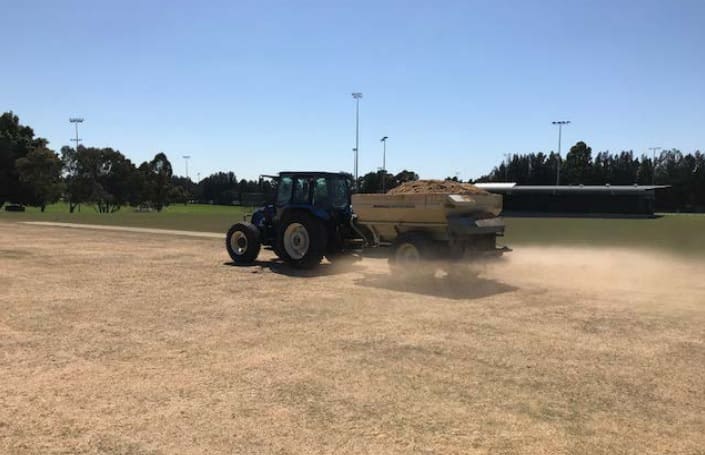
Warm season sports turf typically emerges from winter with a range of issues: canopy loss, thinning or damaged turf, reduced root mass and density, diminished vigour, thatch accumulation and, at times, challenges with infiltration and drainage. A strong renovation program aims to address these issues together because the turf environment is an interconnected system improving one part influences many others.
Understanding these relationships is crucial. Renovation isn’t just a list of tasks; it is a coordinated reset of the turf system to support strong spring recovery and long-term performance.
Disease Protection Before Renovation
One of the most important renovation steps occurs before any physical work begins: disease protection.
This window is where strobilurin fungicides particularly Azoxystrobin are used most effectively. Because strobilurins can only be used for up to one-third of an annual program, timing becomes critical. Pre-renovation is among the most valuable moments to deploy them.
Azoxystrobin delivers a rare combination of attributes: a broad disease spectrum, long-lasting activity, and highly efficient root uptake, which provides whole-plant protection when applied to the soil. This matters because renovation activities scarifying, aeration, topdressing physically injure the plant. These injuries create a vulnerable window where opportunistic pathogens can attack.
Applying Azoxystrobin several days before renovation allows time for a soil reservoir to form and for the product to move through the plant’s vascular system. This prepares the plant for the stress of renovation and protects it throughout the early recovery phase. Because strobilurins move more slowly than triazoles, they perform best as preventatives rather than late-stage curatives. Using them correctly greatly improves renovation success.
Nutrition Selection and the Role of Nitrogen
Nitrogen often receives the most attention in spring nutrition decisions. While phosphorus, potassium and micronutrients all contribute to recovery, nitrogen type, timing and delivery have the strongest influence on growth during and after renovation.
Nitrogen technologies have advanced significantly from basic urea to sulphur-coated and poly-coated urea, methylene urea, and nitrification and urease inhibitors. All of these remain relevant today, providing flexibility to match nutrient release patterns with soil type, site characteristics and budget.
The common goal is alignment: nitrogen should become available at the same pace the turf can use it. Early spring growth is slow, so applying 100% quick-release nitrogen too soon can lead to volatilisation losses or leaching once converted to nitrate. In contrast, controlled or progressively released nitrogen better matches the gradually increasing demand as soil temperatures rise and root activity strengthens.
A practical approach is to compare the nitrogen release pattern of your preferred fertiliser with the expected growth curve of your turf through early spring. If the two don’t align, a different nitrogen source may offer more efficient uptake and better results.
Understanding Soil Temperature and Its Influence on Timing
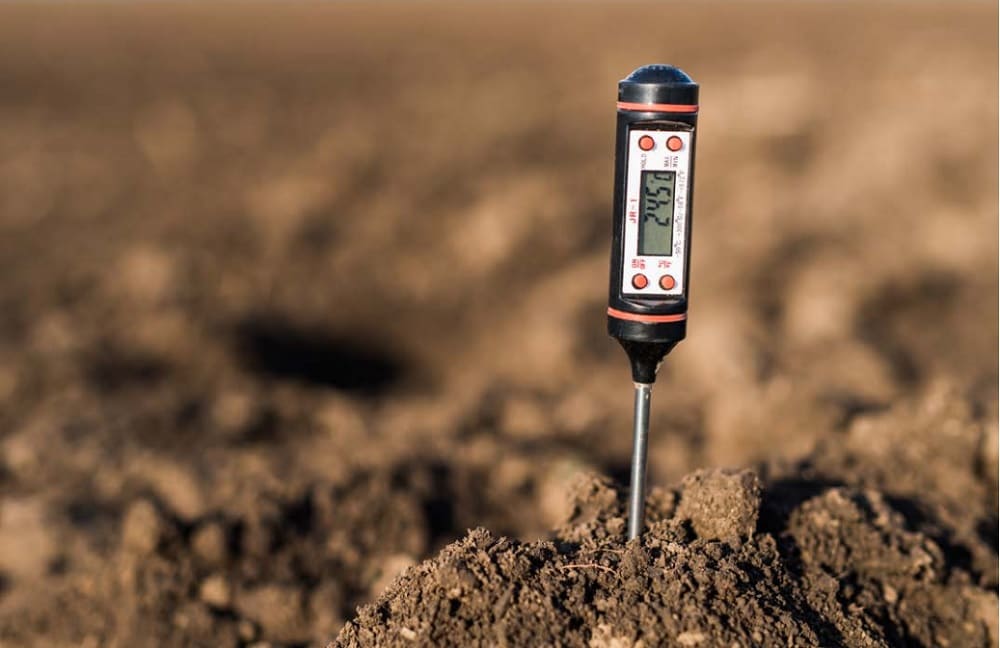
Temperature drives many turf processes, but soil temperature particularly at depth is often overlooked. Root activity depends on soil temperature, not air temperature, and deeper soil layers warm more slowly. Seeds and roots several centimetres below the surface may lag days or weeks behind the temperature at the surface.
This is why early warm days can be misleading. Turf may appear ready for renovation based on air temperature, while the root zone remains too cool to respond effectively. Soil temperature varies with depth, soil type and environmental conditions, making it essential to use more than surface observations when determining renovation timing. Aligning product applications and renovation activities with actual soil behaviour, rather than surface cues alone, leads to stronger early-season performance and healthier recovery.
How Nuturf can help you
The Nuturf Territory Management Team is made up of people who understand turf management, the science behind it and the technologies available. They can help you bring together these considerations with plans that are relevant and tailored to your site. We can assist you with understanding, selecting and using control products and nutrition technologies to get the best possible outcomes for your turf.