How to Control Algae and Moss in Turf Management

How to Control Algae and Moss in Turf Management
What Are Algae & Moss in Turf?
Algae are ancient, photosynthetic organisms found in almost every environment on earth, from oceans and freshwater systems through to deserts, hot springs and snowfields. In turf situations, the forms we encounter are usually the small, single-celled species that form surface films or scums. These belong largely to two groups: the green algae (true algae) such as Chlamydomonas, Chlorococcum, Coccomyx, Cylindrocystis and Cosmarium; and the blue-green algae or cyanobacteria, including Anabaena, Lyngbya, Nostoc, Oscillatoria, Phormidium and Schizothrix. Many of these species can form dense, cohesive layers on the soil surface, creating long-lasting contamination that affects turf performance.
Mosses are equally resilient, though entirely different biologically. They are small, non-flowering plants that survive by absorbing water directly through their leaf tissues. Because their leaves are only one cell thick, they dry out quickly but revive rapidly when moisture becomes available again. Moss species thrive in persistently moist, shaded, compacted or acidic conditions, and once established can compete aggressively with weakened turf.
Why Algae & Moss Become a Problem in Turf
Despite their biological differences, algae and moss share one important trait: an exceptional ability to survive in challenging environmental conditions. Both thrive when soils remain wet, oxygen-poor or compacted. Because they can repeatedly dry out and rehydrate, they gain a competitive advantage over grass in conditions the turf finds stressful.
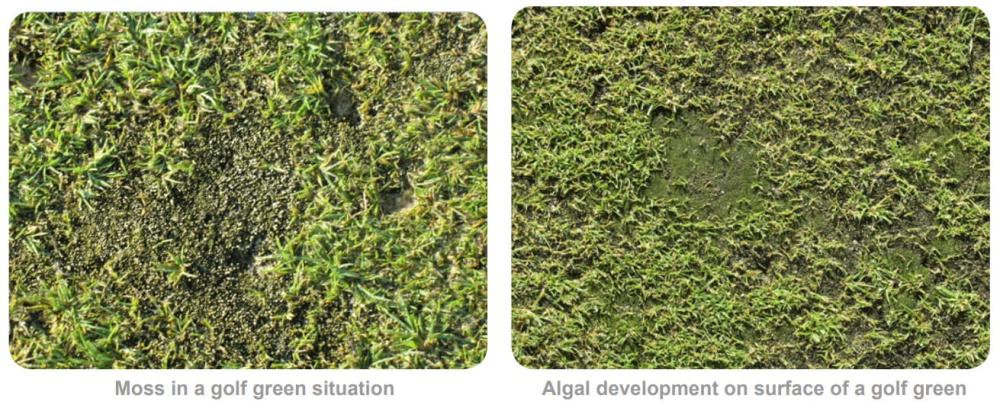
Algae often form a thin, green surface film that later dries into a dense black crust. This crust restricts water infiltration and nutrient movement into the rootzone, leading to uneven turf appearance and poor surface performance. Moss behaves differently but causes similar problems, forming a thick green mat that smothers fine turf species. It tends to dominate acidic soils or any turf area where growth is weak and competition is low.
How to Identify Algae vs Moss
Identification is usually straightforward once you understand the typical presentation of each organism.
Algae generally appear as a slick or dense green scum that coats the soil surface. As this layer dries, it hardens into a hydrophobic crust that repels water and impedes infiltration. By contrast, moss develops a spongy, bright-green mat that grows above the soil surface and slowly displaces turf. It is almost always associated with shade, excessive moisture, acidic conditions or compacted soils.
Cultural Approaches to Reduce Algae & Moss
Long-term success depends far more on correcting the site conditions that favour algae and moss than on chemicals alone. Turf managers should focus on improving drainage wherever possible, particularly in sand-based or compacted areas. Increasing airflow and adjusting irrigation scheduling to avoid prolonged leaf wetness are also important steps.
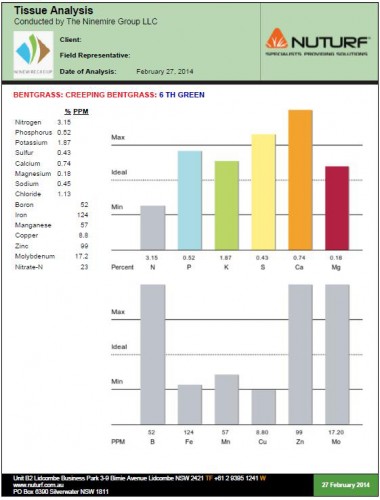
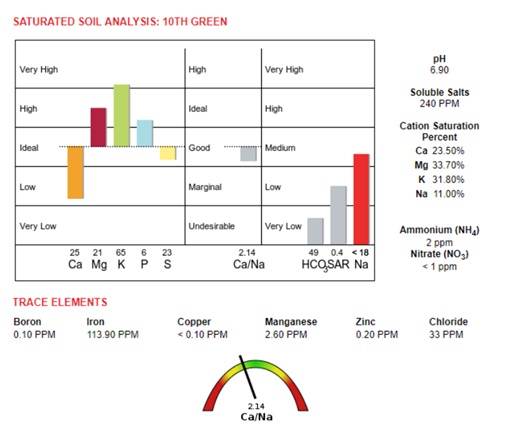
Physical removal through coring, verti-draining or raking out moss and algae can provide immediate visual improvement, although it is labour-intensive. Correcting soil pH particularly raising acidic soils with calcium-based amendments can significantly reduce moss competitiveness. Improving nutrient balance, especially by ensuring an optimal cation ratio of calcium, magnesium, potassium and sodium, strengthens turf health and reduces the capacity of algae or moss to dominate the surface.
Chemical & Nutritional Tools for Control
Chemical control of algae and moss can be effective but often requires repeated applications and is best used alongside cultural improvements.
Fungicides such as mancozeb (Penncozeb 750DF) are registered in Australia for algae suppression and may reduce moss incidentally. Chlorothalonil (Daconil) is not registered for this use in Australia but has been shown overseas to provide partial moss reduction. Because these products typically suppress rather than eliminate the problem, they are usually applied in weekly intervals and should not be relied upon as the sole strategy.
Algaecides including dichlorophen (Kendocide) and benzalkonium chloride (Surrender) can be useful, although success varies depending on species and environmental conditions. Spiking or verti-draining before application improves penetration and overall effectiveness. Benzalkonium chloride is an especially useful option for moss on couch and bentgrass surfaces when applied to a well-fertilised turf stand.
Herbicides targeted at moss, the most notable being Silverado (Carfentrazone + MCPA), offer more reliable results. With repeated applications at 14-day intervals, Silverado has demonstrated more than 90% control in trials by inhibiting chlorophyll production.
Fertiliser-based suppression, particularly through iron applications, can also contribute to moss and algae management. Ferrous sulphate applied at 95–280 g per 100 m² causes dehydration and darkening of affected patches, with eventual decline of the organisms.
In most cases, the best outcome is achieved through a combined strategy: cultural practices to change the environment, chemical treatments to reduce populations, and nutritional support to strengthen the turf’s competitive position.
Managing Algae in Water Sources
Algae not only affects turf but can also become problematic in irrigation dams and storage tanks. Freshwater algal blooms often indicate high nutrient loading especially nitrogen and phosphorus or low oxygen levels. Regular water testing, including COD (Chemical Oxygen Demand), helps identify the underlying issue.
Where sludge buildup exists, Biostim pellets or powder can be highly effective. Biostim stimulates aerobic bacteria to produce enzymes that rapidly break down organic waste, reducing sludge and limiting the nutrient base that algae and weeds rely on.
For direct algal control in water, modern algaecides such as Coptrol provide a safer alternative to older copper sulphate treatments. Coptrol uses a chelated copper compound that algae actively absorb. Once ingested, the copper becomes toxic to the algae but remains safe for fish, plants and irrigation equipment thanks to its protective organic chelate.
How Nuturf Can Help
Nuturf offers a broad range of wetting agents, penetrants, herbicides, fungicides, algaecides and fertiliser products suited to every turf situation from greens management to sportsfields and high-traffic turf areas. Our Territory Managers can help design a customised algae and moss management program that balances cultural improvements with the right chemical and nutritional tools. With access to water testing, soil amendments and the full Stamina wetting agent line, Nuturf can support you with long-term solutions tailored to Australian conditions.